
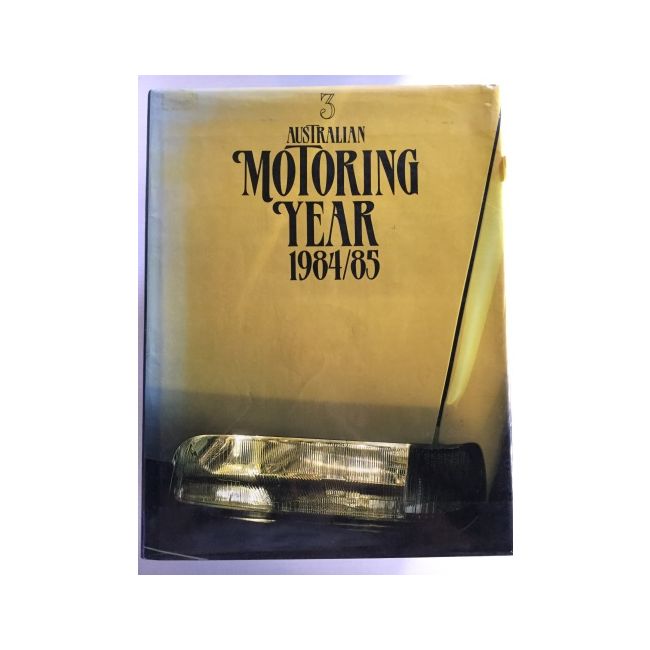

Australian Motoring Year #3 1984/85
A$25.00
If 1983 was a tumultuous year for the Australian motor industry, 1984 was even more eventful. It saw, most importantly, the unveiling of the Federal Government's new post-1984 plan for the industry. Quickly crhsitened the Button Plan, it was greeted with cautious approval by the industry, most expressing the fervent hope that this would be the end of govermnents endlessly tinkering with the fortunes of Australia's biggest industry. Within months its first effects had become obvious, when General Motors-Holden's intruduced a Holden-badged Pulsar, and Nissan's president in Japan warned the company could reverto to being a CBU importer instead of a manufacturer.
The year also saw GM-H make an unprecedented attempt to muzzle the Australian press from publishing details of the new six-cylinder Nissan engine it was buying for the 1986 Commodore, but despite remarkable extensions of legal precedent, the news ended up being published after all. The year saw a new Commodore range, new Falcon range, a new Camira, the delayed introduction of the 190E Mercedes, a raft of Japanese import good and bad, and the long-awaiged Alfa 33.
It saw the end of the Group C dinosaur touring cars and the first glimpse of Group A as a formula, with its strong hints of factory participation. It saw BMW outsell Mercedes-Benz yet again, but Volvo once again easily came home the top European car. The truck industry started to recover, and an unexpectedly strong revival saw total motor industry sales push over the 630,000 mark. And it also saw the industry start to realise the problems coming in 1985 with unleaded petrol. All this, and more, in this third issue of Australian Motoring Year.
Availability:
Out of stock
SKU
ISSN 08109958 Vol 3
- Title: Australian Motoring Year 1984/85
- Editor: Bill Tuckey
- Publisher: BFT Publishing Group
- Number of Pages: 320
- Cover: HARDCOVER
- Condition of book: All pages present, no major markings or damage. The dust jacket & edges of hardover have some wear.
- Publication date: 1985
- Country of publication: Australia
| Classification | Hardcover |
|---|---|
| Manufacture | Adventureline |
Write Your Own Review